Where will I find data for my subject area of advertising?
* Magazines
* Google images
* Newspapers
* Internet
* TV
* You Tube adverts
* General posters e.g. bus stop adverts
* Leaflets
Monday, 8 September 2014

Potentially useful sites for my topic of advertising...
http://advertising.about.com/od/copywriting/a/The-10-Most-Powerful-Words-In-Advertising.htm
http://web.stanford.edu/class/linguist62n/
http://www.superdream.co.uk/best-advertising-slogans/
http://advertising.about.com/od/copywriting/a/The-10-Most-Powerful-Words-In-Advertising.htm
http://web.stanford.edu/class/linguist62n/
http://www.superdream.co.uk/best-advertising-slogans/
Wednesday, 3 September 2014
A2 Personal Investigation ideas...
I would like to investigate the language used within
advertisements, though the focal point hasn't been decided upon yet. I
have a few ideas I came up with whilst brainstorming...
1.Look at how different
food groups use language to persuade you to buy it - e.g. fruit &
vegetables (healthy statistics) and chocolate (imagery of cosy, luxury,
delight)

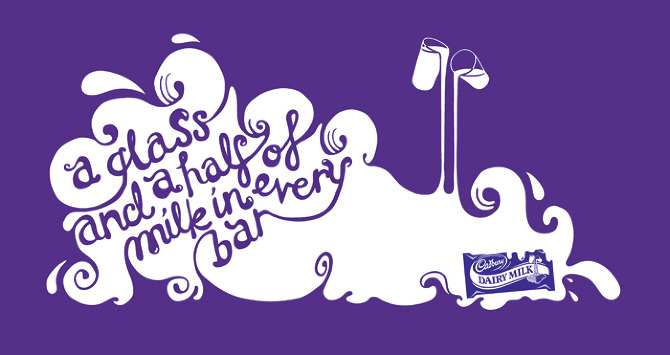
2.How language varies
with different types of holidays


3.How language alters
with objects of different prices


4.How language changes throughout the seasons


5.How the same product
has been presented over a given period of time
Sunday, 22 June 2014
Oxford English Dictionary terms
1. New words have entered the English language through ‘borrowing’ whilst being in contact with people of different cultures with diverse languages, for instance ‘The word cushy was borrowed from Urdu by the British military in India’, words were also formed as a description to the conditions they were in.
2.
Whilst reading through the article I had to look
up the following words to receive their definition: ‘spike bozzle’ (meaning to
badly damage or destroy an enemy weapon), ‘napoo’ (meaning that there is no
more of something, it’s gone, finished - oringally army slang, presently rarely
used) and ‘maconochie’ (meaning vegetables stewed with meat in a tin).
3.
The OED have chosen 100 terms to include in the
list within the article to provide a ‘record of social history’ – I feel they
have chosen a broad range that covers multiple years and numerous segments under
the heading ‘War terms’ – it shows how the war effected everyone, e.g. ‘domestic
and civilian life’ and ‘life in the trenches’.
4. I could use this corpus of terminology to investigate how many terms are used today or how many of the words today’s generation know the definition to, perhaps to understand how effectively social history has been captured through learning about historical events.
4. I could use this corpus of terminology to investigate how many terms are used today or how many of the words today’s generation know the definition to, perhaps to understand how effectively social history has been captured through learning about historical events.
5. This article could be linked to transcripts
written with present modern day speech from various dialects, socialects and idiolects
so that a comparison can be made to portray how language has altered over the
years but to also identify what has stayed the same, maybe due to high significance
or simplistic catchy terminology.
Tuesday, 10 June 2014
Discussion of a hero text.
Our group decided to focus upon the Twitter text due to the minimal wording content- this suggests that what's written is of high significance and has been thought about carefully to propose a certain message (however it could be the result to the quick interaction on the popular social networking site).
This blogger has aspects of influential power, an indicator could be the statistical timings of each tweet, the close relationship in time could show how this particular tweeter has a lot of information to share, which in large sums potentially appeals to varied markets (more viewers) - however the target audience is filtered through the use of jargon.
The term 'retweeted' shows that the given content was vastly influential so was shared to hopefully receive a reflecting, positive impact upon the new audience.
Friday, 21 March 2014
Men and women are of
the same species therefore their power should be adequately equivalent but that
view was absent when the English language was generated…
Dominance:
When partaking in convocation with mixed-genders and varied statuses,
dominance becomes apparent as people try to achieve their convocational aim. It
has been said that when convocation takes place between man and women; men are
more prone to interrupt.
Dale Spender - 1980-
“Male dominance of lexis leads to female negative space.” Dale Spender has discovered that as men were
the dictionary author’s words often refer to their gender e.g. ‘women’ contains
the term ‘men’- stating men’s power upon language.
In connection, the term ‘butch’ refers mainly to women addressing
that they have manly assets/habits but the word can be expressed towards men;
whereas the word ‘camp’ is purely specified towards men referring that they
have feminine conducts (women are not generally
said to be camp). This illustrates how men have terms dedicated to them where
as women have to share a term.
Job description- http://www.snagajob.com/job-descriptions/host-and hostess/
A job description has a sub-heading - ‘What do
Hosts and Hostesses do?’ almost
referring to the alternated term as a completely different job. These marked terms stress how male dominance
is shown with great clarity. It continues to state both variations of the word throughout
the whole piece of text – perhaps this is to avoid offense from one gender if
only a single term was used or to redefine that the job is open to males and
females (the text’s purpose is to inform and maybe persuade people that this
job is most efficient for them).
Further down in the text the job implies that the job is
perhaps desired for a male ‘work their way into manager jobs.’(manager – male,
manageress – female) – this could however
have been done accidently because the term ‘their’ has been used to imply that
there are numerous candidates that have equal chance.
Friday, 7 March 2014
I am looking at Text C and E and comparing the way in which they express their language through two way communication.
To communicate Text C uses high frequency lexis in a polite tone because the form is a children’s book and the target audience is children. The book uses simple terminology perhaps so kids can read the book themselves or maybe it’s purely so they understand the content when guardians are reading it to them - this explains the polite tone the characters possess 'Good afternoon'; its sending a positive message to the younger generation to preserve and develop their manners. During the convocation between Mr Muddle and Mr Bump in text C, the relationship between the characters becomes apparent - 'Do you know what my name is?' 'You're Mr Carefull' . The characters obviously know each other yet due to the forgetting nature of Mr Muddle the answer he gives to Mr Bump is incorrect even though they may be well acquainted.
Text E also uses high frequency lexis but in a subconscious manner - as the text is in the form of a transcript that’s not been rehearsed (convocation between a customer and vendor) so it is full of terminology people use in day to day speech, this illustrates why fillers 'er', pauses and overlaps are present. The two subjects are not very familiar with one another but have a relation towards the content of the matter at hand (newspaper account). This could be why subject B hazards a guess towards the title of the enquiry 'It's 135 Penny Street isn't it'.
Subscribe to:
Posts (Atom)